Franklin’s Pros & Cons Framework

One of the first widely known framework for decision making by Benjamin Franklin

Franklin writes:

In the Affair of so much Importance to you, wherein you ask my Advice, I cannot for want of sufficient Premises, advise you what to determine, but if you please I will tell you how.

When these difficult Cases occur, they are difficult chiefly because while we have them under Consideration all the Reasons pro and con are not present to the Mind at the same time; but sometimes one Set present themselves, and at other times another, the first being out of Sight. Hence the various Purposes or Inclinations that alternately prevail, and the Uncertainty that perplexes us.

To get over this, my Way is, to divide half a Sheet of Paper by a Line into two Columns, writing over the one Pro, and over the other Con. Then during three or four Days Consideration I put down under the different Heads short Hints of the different Motives that at different Times occur to me for or against the Measure. When I have thus got them all together in one View, I endeavor to estimate their respective Weights; and where I find two, one on each side, that seem equal, I strike them both out: If I find a Reason pro equal to some two Reasons con, I strike out the three. If I judge some two Reasons con equal to some three Reasons pro, I strike out the five; and thus proceeding I find at length where the Balance lies; and if after a Day or two of farther Consideration nothing new that is of Importance occurs on either side, I come to a Determination accordingly.

And tho’ the Weight of Reasons cannot be taken with the Precision of Algebraic Quantities, yet when each is thus considered separately and comparatively, and the whole lies before me, I think I can judge better, and am less likely to take a rash Step; and in fact I have found great Advantage from this kind of Equation, in what may be called Moral or Prudential Algebra.
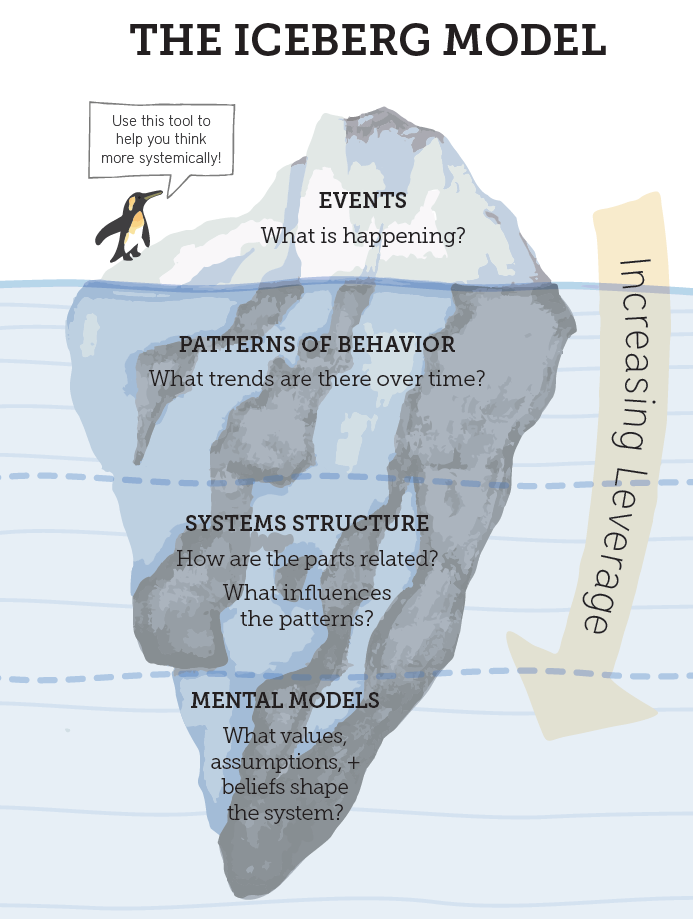
Elastic Thinking

Leonard Mlodinow explains “Elastic Thinking” as

The capacity to let go of comfortable ideas and become accustomed to ambiguity and contradiction;

The capability to rise above conventional mind-sets and to re frame the questions we ask;

The ability to abandon our ingrained assumptions and open ourselves to new paradigms;

The propensity to rely on imagination as much as on logic and to generate and integrate a wide variety of ideas;

And the willingness to experiment and be tolerant of failure.

7 Critical Thinking skills

[Found this among my notes … will update source link]

  1. Dynamic Thinking
    1. Patterns of Behavior over time
    2. What happens to key variables over time
  2. System as a Cause
    1. How the Behavior arises and ways to improve behavior
    2. How could we have been responsible (Internal focus)
  3. Forest Thinking
    1. Practice focus on similarities than differences
  4. Operational thinking
    1. How is behavior actually generated
    2. List of factors that influence or drive results
    3. What is the nature of the processes
  5. Closed Loop thinking
    1. Effects feedback to influence one or more factors (Causes) and the Causes themselves affect each other
    2. Driven Drives & Drivers drive each other
    3. How dominance of variables shift over time
  6. Quantitative thinking
    1. You can always quantify (Though not measurable)
  7. Scientific thinking
    1. Disregard falsehood & Identify high leverage intervention points (Using Logic / Analytics)

3 Steps to successful Org transformation

To make a successful organizational transformation, there are only three overarching needs, everything else is subordinate to these

I) Leaders need to believe in the transition process & the benefits of making the transition

II) Leaders need to demonstrate that belief, through their actions and communications.

III) Both 1 & 2 above has to be continued till the transition is complete and deemed Sustainable

Dilution in any one of the above is a recipe for failure, while perseverance demonstrated on the 3 Steps, guarantees Success

The Hidden advantage of Team Problem Solving

When teams come together to identify root cause of problems & determine corrective actions, they don’t do just that.

Coming into the discussion most participants, bring with them their perspectives & opinion on what went wrong & how to solve it.

After an hour of brainstorming they identify some Root cause/s and a series of actions to address them.

When leaving the discussion, they take back a whole bunch of different perspectives, alternative viewpoints, and a much better appreciation of the problem & its complexities.

That learning & experience is the true value of Team problem Solving exercises.

The missing pillar of Problem Solving

Problems come in different forms, shapes and size, and to solve them, there are numerous methods or paths that can be taken. Six Sigma DMAIC Process / Rapid Problem Solving / and 8 Discipline Problem Solving (8D) are some of the methods that i have come across.

Each of them are applied in appropriate contexts based on their Merits and de-merits. or rather more often, on the organizations preferences, comfort level & culture.

The Least articulated (less detailed) of the 3 processes is the Rapid Problem Solving (RPS) Method

1. Problem description
2. Grasp the Facts
3. Containment Action
4. Identify Point(s) of Cause (Ishikawa diagram)
5. 5 Why analysis
6. Identify actions to address root cause(s) and prevent recurrence
7. Follow up on the actions check effectiveness & make corrections.

The Six Sigma (DMAIC) & the 8D methods are used when problems are more systemic or complex. They elaborate on each of the above steps with additional tools & practices, with an intent to enhance the understanding of the problem.

There is additional focus on gathering objective evidence of the problem & solution effectiveness through measurements & Analysis. 5W | 2H | 1C are further stressed upon.

The Control Plans in DMAIC and Prevent Recurrence (Step 7) in 8D – make the need to update the relevant documents, SOP’s, Checklists & Guidelines explicit.

Each of these problem solving methods have evolved and have been useful.
So what is the missing element ?

I have often found that a “Sense of Urgency” is missing. It is a soft (behavior) element that is critical, for the problem solving to be effective. “Cost of delay” in implementing the identified actions, undermines it’s primary intent.

We may need to measure the Cycle time from the point when the team is formed to when the identified actions are all addressed. there needs to be an organization focus towards reducing this Cycle time for Problem Solving.

Without this “Sense of Urgency” instilled in the workforce, the practice would end up as only a documented evidence for process compliance Audits.